Athelas Webinar | AI in Action: Strategies for Modern Healthcare - Episode 1: Orthopedics Edition
February 26, 2026

Athelas Webinar | AI in Action: Strategies for Modern Healthcare
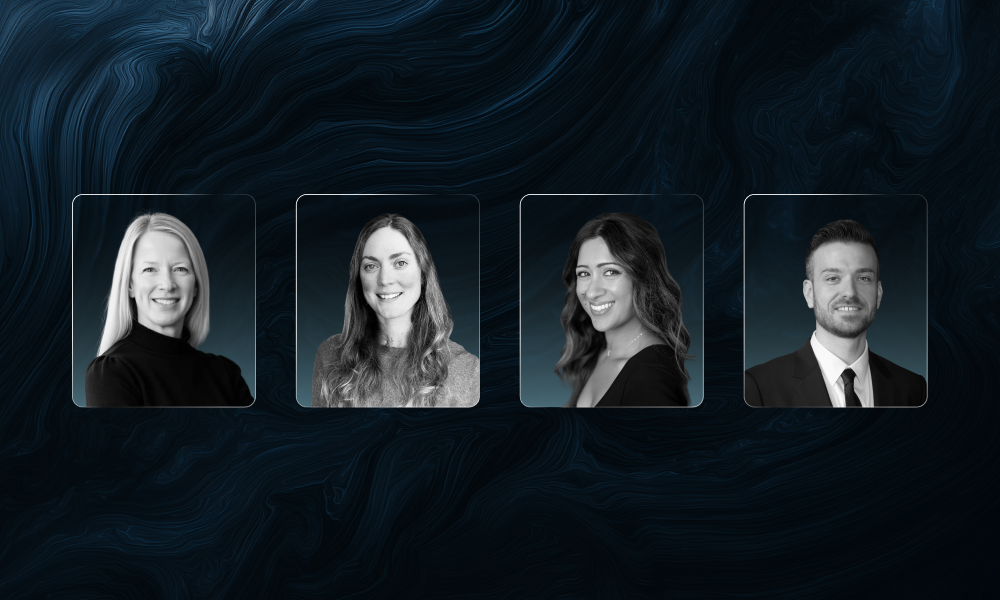
Hosts: Melissa Erlandson (Athelas), Nina (Athelas), Ramnik (Athelas)
Guest: Ross Rigden (CEO, Raleigh Orthopaedic Clinic)
Hi, everyone. I'm Melissa Earlinson. I'm a PT by trade and I'm part of this team here at Athelas. We are so incredibly glad that you decided to carve out 25 minutes with us to join us today. I'm joined today by two of my colleagues who are instrumental in how we partner with practices like yours. Before we dive in, I'd like to give them the opportunity to quickly introduce themselves. Nina, can you start us off?
Yeah, thanks so much. Hi, everyone. My name is Nina, and I'm a physical therapist by trade. And for the past while, I've been working at Athelas, um, helping healthcare practices streamline workflows using our automated solutions. So, really excited to chat with you all today.
Thanks, Nina. Ramneek.
Hi, everybody. Thanks so much for joining us today. We appreciate your time. My name is Ramneek, and I'm a physical therapist and I am on the clinical RCM team here at Athelas. Thank you.
Thanks, guys. We know that if you are a CEO or COO, or even if you're running your RCM department in your orthospace right now, your inbox is probably flooded with AI this and automation that. Guilty. We send those. We're part of the folks that are sending those emails. I know it can feel like a massive bubble of hype. Our goal for the next 20-ish minutes is to pierce that bubble and talk about what actually what it actually looks like in a living breathing practice. At Athelas, we have obsessed over creating a clinical co-pilot that handles the heavy lifting from the front-end eligibility and intake to the backend RCM and documentation. But we know that hearing it from us is one thing and hearing it from somebody actually facing the headwinds is yet another. That is why we are so thrilled to have Ross Rigdon with us today. Ross is the COO of Raleigh Orthopedics. Ross, we've been really looking forward to this because Raleigh is such a respected name in the ortho space. And you've been remarkably candid about what it's been like on your AI journey as a legacy practice. You didn't just flip a switch and turn on AI, like many on this call. You had to face skepticism and some of the workflow shifts that come with deploying AI. So Ross, thank you so much for being here to kick us off. And for those who may not be familiar with Raleigh Orthopedics, can you tell us about the scale of your practice and your role at Raleigh?
Sure. So, thanks for having me. I'm I'm Ross Rigdon, as was introduced. So I'm the COO at Raleigh Orthopedic Clinic here in Raleigh, North Carolina. We are a privately owned orthopedic group. We have 27 physicians, 28 APs across six clinic locations, 11 physical therapy sites, and two ambulatory surgery centers. So, roughly about 540 total employees. So, we've, not a small group by any means, but not a large group either. So, nice middle of the road.
Awesome. That's wonderful. Thank you for sharing that. So, I have lots of questions for you today, which we're really excited again to have you. But starting off our questions with what tools are you currently using from Athelas and how has it changed the way you operate?
Sure. So, our partnership with Athelas started in the ambient scribe space. So we started with the ambient scribe, obviously to to work on the dictations and relieve a lot of the pressures from the physicians whenever they're performing their notes so that they can focus more on the the patient, as opposed to the documentation aspect of it. From there, we were actually sort of forced to look and evaluate a new EHR system for our physical therapy department. So, having worked with Athelas and understanding the dynamic of the organization and what they were working towards building, striving for we were presently surprised to find out that that you guys have it in EHR. So, we demoed it. Our physical therapy director was involved and we we kind of put it through the the mills. And in that process, you know, after vetting a lot of the different PT EHR vendors we decided that we wanted to continue our partnership with Athelas and and build from there. So, as part of that we are on the full suite of products with the platform. So, that includes all of our intake, our EHR, ambient scribe, and RCM. So, in PT, we are a one platform system. So, we are everything Athelas on on that side.
Awesome. Thanks for sharing that as well. You said forced to change. I know that in your particular situation, sometimes the PTs are kind of an afterthought as far as their documentation goes. I'm curious to know what forced you on that side to change.
Yeah. So, like most systems, or really anything today, we're all transitioning to a cloud-based environment. So, we were on an on-prem EHR for physical therapy. It was a PT specific EHR, and they were sunsetting that. They were getting rid of it altogether. So, we had to make a decision whether we were going to go to their cloud-based system or evaluate something else. They wanted to move us, obviously, to their cloud-based system, but wanted to essentially double the price for no real added benefit other than being in the cloud versus on on premise. Obviously there's a particular set of expenses that go along with cloud versus on-prem. But we didn't feel like the system itself really fit our needs the way that we determined that the system did.
Makes a lot of sense. Thank you. So what helped drive adoption among providers who were more skeptical or maybe less tech-savvy?
Sure. So, seeing it in action, right? And I think on our physical therapy speaking, you know, more directly towards them because that's where a lot of it it lives and breathes. They didn't really have a choice, right? So they kind of had to to either sink or swim in in a little bit. But that was a really great thing because the ones that were skeptical of it really had to learn it and figure it out and have done really well. They were very easy to kind of bring to the other side of the the coin and, you know, a significant portion of our staff was very excited to embrace the technology. You know, I think we all use AI technology in our our day-to-day life and to be able to incorporate that and and take a lot of the pressures off of what they're doing on a day-to-day basis brought a lot of excitement and joy. The team itself at Athelas helped bridge that gap very easily because during that launch process, that that integration process, they were very hands-on, still very hands-on to this day and really created this sense of security around us making this decision and this move. So, wherever apprehensions lived, they were very easily combed and and moved over. So it was a a a very smooth transition contrary to what one might think moving to a new HR would be.
That's great to hear. And as a physical therapist, I spent 16 years, first 16 years of my career in direct patient care. And I have to say documentation was a big, well, for most of us, a big pain in the butt. So, it makes me very happy to hear that your PTs are having joy. Yeah. How did you, how did AI change the day-to-day experience for your billing and revenue team?
So, you know, before I even kind of get to that piece, you know, just kind of adding on to the the previous part, you know, you mentioned about documentation being a a pain point as a therapist right? And I think a lot of people would very confidently say that they would still be in therapy or as a therapist if they didn't have to deal with the documentation piece. And, you know, one of the greatest highlights of that is you know, it's removing that documentation off of our therapist so that they can focus on the prov, the patient. They're going home same day every day with all of their notes done. Whereas previously, you know, you may have a therapist that would be seven, eight days before completing and submitting a note, right? All of that transitions into the RCM piece, because as we're all very well very well aware here, you know timeliness is everything when it comes to billing and submitting charges and it's a constant battle with the insurance companies. So, the sooner we can get those charges out the door, get them out cleanly, which were assisted by a lot of the suggestions and prompts and and rules that we're able to build within the Athelas system, we're able to ensure that when the claims are going out, they're going out appropriately. So, not only are we able to get the claims out faster, we're able to get a response faster as well. And if we're stopping claims from going out dirty, we're able to ensure that a greater volume of those claims going out are getting paid in a more timely fashion.
That's that's wonderful to hear and it makes me think about how I conceptualize what we do at Athelas. I imagine many of the things that we do as getting upstream before that before that broken process causes all the rework downstream, whether it's, you know, the wrong coding or I'm drawing a blank on other examples at the moment, but just those things that upstream can cause a plethora of problems downstream. And to your point Ross, delay that payment. That is so important, especially in the PT space. Over my career, I've seen those reimbursement rates tick down like a I call it the boil, the boiling frog. You know, it's almost imperceptible because it's little by little by little by little and then it finally adds up and and you have such thin margins. So thank you. Thanks for sharing that. Was there any fear around using AI tools? I think you know, kind of what we think of as the elephant in the room is am I going to lose my job? Was there fear either when the subject was first brought up or as you were implementing?
Yeah, it it's always a mixed bag, right? I think a lot of people are very excited by it. I think, you know, Chat GPT has become a common name in in most households. So everybody are kind of is kind of familiar with it. There's a lot of fear associated with it. But where the folks that are not excited about it and have that little bit of apprehension, a lot of times they're the ones that are complaining about being overwhelmed, being drowning in their work, where they can't keep up, and you know, as all these changes come forward. So what I tell my staff and and those that are skeptical is, what if we use AI to help you do your job better right? I have no desire to replace you. I have no desire to move you somewhere else. I need you to be great at what you do. I need you to be great with patient care. I need you to focus on who you're working with, not necessarily what you're working with. That's my job is to make sure that you have all the tools appropriate to do the best that you can. Right? So, obviously there are, you know, instances where attrition happens. And we may not need to replace that position, right? And and that's a great thing because if I can focus on higher quality individuals doing the job with supplemented by AI, then I can focus on rewarding them for what they're doing and really, you know, pay them for what they're what they're worth, right? And and not necessarily have to worry about that side of things.
That's great. And you kind of already alluded to this a little bit, I think, but anything you else you would add to what did your practice look like before you deployed AI or the tools that you currently have deployed?
Yeah. So, I I think, you know, timing of documentation is key, right? And how how quickly we're able to get notes out the door and and charges dropped in the system. We're on very local server-based systems primarily, or or have been. And you know, one of the things about that is and the transition to, you know, AI is making sure that we're um kind of staying with the times of things, right? A lot of systems are built and partially integrate with other systems. And, you know, you really need four or five different platforms, sometimes more than that to make your EHR work, to make your practice management system work. So you're just continuing to bolt on different features and added functions and, you know, it drives a lot of technology fatigue because you get evaluated with a system, you're sold on 100% efficiency. You bring it into your organization to realize that that system doesn't necessarily integrate with your EHR. So while this platform may be great, you're only getting a portion of it. You're not actually getting it at full expertise you know, and oftentimes you're paying more with the expectation that you're going to reduce overhead in other areas and you're not able to do that. So you're stuck with these other platforms that are doing things that you need them to do in certain capacities, but your cost continues to climb. So, you know in working with AI and in working in one system that kind of handles and works with everything, you know, there's 100% integration. You know, there's going to be efficiencies gained because everything is talking to everything right? It's all living in one place where we can all look at one one source of truth for everything. So before and after, you know, AI in general, it's it it's a much more cohesive environment than what it used to be. And as these systems continue to evolve and grow particularly in the AI space, as the technologies improve exponentially as they are, we know that the systems are going to continue to grow exponentially along with the new developments. Whereas our old outdated systems, they're not able to keep up. So, you're almost going to be forced out of it. You know, I mentioned it earlier with our on-prem system and going to the cloud, right? We were forced out of that system because it's obsolete. It doesn't work anymore. It's it's not efficient.
yeah, and that certainly tracks with what we hear, Nina and Ramnik and myself on a daily basis. Another analogy I like to use since we're all in health care is prescription drug medications for patients. You add one medication that's supposed to take care of the primary issue and that gives you some side effects and then you take drugs for those side effects which give you more side effects and so on. And so I kind of think about that for tech. We see that so often that one new platform is supposed to solve this problem, but it creates another unfortunately in some cases.
I will definitely use that. That's great, but it's so true. It does. It kind of tracks. Yeah, for sure. So, what we also hear, I actually talked to somebody who said that AI is in a bubble. He was actually an IT director. So, I want to address that sort of elephant in the room as well. Is, how do you, as you were evaluating tech platforms, how did you separate the hype from what you thought was real? Because I know that's what some of our practices are facing today with so much coming at them. How did you guys vet your AI tech in that evaluation?
Sure. So, we were very particular in how we demoed tools. So, one of the things that we wanted to do was make sure that we're seeing real live claims in in regards to RCM or real life experiences. You know, anytime you can pilot something, you're always going to have a better understanding of how it works because a demo environment is perfect and we all know that healthcare and our day-to-day is not perfect. So, we demoed in real life environments. We had actual claims where we had AI agents were calling on our claims and we were listening to it happen in real time. We were visiting other individuals that were working with the system and we're seeing them use it on a daily basis to see how they're actually functional, you know, how it's functioning. Because again, you know, you may be sold on something in in a demo environment, but real world use of it may may be different. So, we wanted to see how it worked in that real world. And there was one platform that that stood out, right? And and what we were shown was most similar with what we experienced as well. One of the things that I think, you know, tech exclusive is, you have people involved, right? Like there's always going to be individuals that you have to interact with. There's always going to be engineers, support things in that nature. So, if you can work with a a tech company that has that infrastructure of of people, that human in the loop, which is commonly said you know, that you're going to have that relationship where you can build out what you need when you need it, and really focus on those areas where something may not be working. Right. Right. It is tech. It's ever-changing. So, there are going to be bumps and bruises along the way, but you want to make sure that you're partnering with a a group and a company that will work with it with you as opposed to saying "Nope, this is kind of what you get. This is what we've designed. This is what we've deemed best." Have at it. Right? And we didn't want that. And we wanted to make sure that we got in with a company that that had those same values that we did with our employees, with our physicians, with with everything and and we're working together.
That's great. I know we're getting low on time and I have so many questions to ask. So, but thank you. Ross, a couple more before we round out this call today. I think this was an important one to answer. Some practices feel they're not ready for AI. What would you tell them?
You are going to get left behind. I think, you know, if you're not utilizing AI in your practice now, you have to understand that the insurance companies are and have been for a long time. We are at a point in our journey where we kind of have to fight AI with AI, and we need to make sure that we're competing with these companies that have hundreds of billions of dollars that they're pumping into the the AI space and and we can't do it alone and you're not going to do it on these legacy systems that aren't keeping up with it. So you know, we we have to make sure that we're we're competitive, we stay relevant, that we are utilizing the tools to focus on that human interaction, right? Why would you want to have people doing tasks that can be automated? Automation is not a new concept. Henry Ford implemented automation into the Ford industry in the 1960s, you know, and it goes back even further than that. So, it's not like this is a new thing, and it's nothing to be scared of right? I think cautiously optimistic is probably, you know, a more appropriate because you you want to be, right? You want to make sure that you're vetting these systems out and and making sure that things are not getting away from you and that you remain in control. But you got to stay with it. You got to keep going and learning with it. If you're not if you're not learning, you're you're not doing it right.
I couldn't agree with you more. I think it's so important, you know, to your point that insurance companies have already got a head start. So, but I think this is a good one to round out our questions with. If another orthopedic COO, which you probably run into next week at the places you'll be speaking at at Ortho Forum and I think you said Cincinnati. If another orthopedic COO asked you for one piece of advice before evaluating AI, what would you tell them?
I think it goes back to the partnership element, right? I think there are certain questions that you can ask to make sure that a company is being forthright and upfront with what technology they're bringing, right? Ask them what kind of models they're using. And if they tell you that it's some sort of proprietary secret sauce that they've built in house, chances are it's it's not going to be up to the same standards as what some of these bigger open-source systems are that we're all familiar with. Every company is going to have their own little tweak on it right? It's all their own version of it but it all comes from the same source initially. So, if they're not honest with you about where their platform is based on, they're probably not going to be honest with you with anything else. So, that's the whenever I'm having these conversations with with any AI company, that's always the first question I ask them, and it really is the litmus test for how the rest of the conversation is going to go.
That makes a lot of sense. Well, Ross we cannot thank you enough sincerely for your transparency. We know it's rare for for to have an honest look of how that roll out looks, you know, before and after. So, thank you. And for everyone watching, we realize Raleigh Orthopedics journey is unique. Each practice is unique. But the challenges are typically similar. Ramnik, Nina, and I hear this on a daily if not weekly basis. Too much documentation and too many denials. So, if you're curious about how these some of these workflows could be optimized in your specific practice for 2026, of course, we would love to have that conversation with you. So, Nina Ramneek, and I are opening up spots on our schedule to be able to talk to you and have a cons a consultation for your specific practic practice needs. So, we'd like you to watch for an email in your inbox with an a link to schedule a meeting with us, but please know that you can reach out to us at any time with any questions or concerns. And we just want to thank you again. We know your day is busy. We're sure grateful you decided to spend some time with us today. So, thank you so much and have an awesome day.
Yeah, thanks, everyone. Thanks, Ross. Thanks for having me. Likewise, if anybody has any questions, I'm always happy to dive deep and and answer anything you may have. So we appreciate you so much. Thank you Ross. And good luck at Ortho Forum.
Thank you very much.